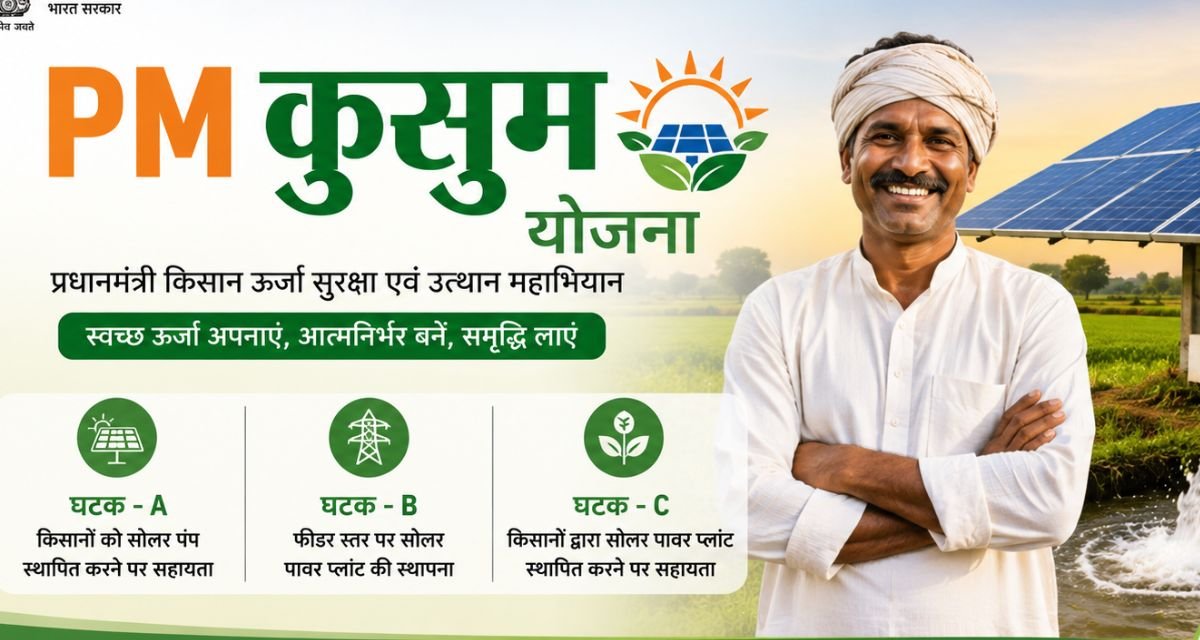
The PM-KUSUM Yojana, which stands for Pradhan Mantri Kisan Urja Suraksha evam Utthaan Mahabhiyan, is a big step by the Indian government to support farmers. The main idea? Make clean and affordable energy easier for farmers to use. The scheme leans toward solar power, which means farmers aren’t just stuck relying on diesel or regular electricity.
What is PM-KUSUM Yojana?
It helps farmers set up solar pumps and small solar power plants. With these, farmers can produce their own electricity. Even better, if they wind up with more power than they need, they can sell the rest back to the grid and make some extra money.
The plan really aims to do three things: Give farmers a steady, clean energy supply. Cut down on diesel use in farming. And help farmers earn more by letting them sell surplus electricity. Simple as that.
PM-KUSUM Yojana breaks down into three main parts:
First, farmers or groups, like cooperatives, can set up small solar power plants right on their own land. The energy these plants generate goes straight into the grid, so farmers get paid for the electricity they produce.
Second, there’s support for installing solar pumps. These standalone pumps don’t need diesel or regular electricity they just run on solar power, giving farmers a cleaner and cheaper way to irrigate their fields.
Third, if a farmer already uses electric pumps, those can be switched over to run on solar energy too. On top of powering their own irrigation, farmers can sell any surplus energy back to the grid.
- PM Vishwakarma Yojana 2025: पीएम विश्वकर्मा योजना क्या है? PM विश्वकर्मा योजना आवेदन, पात्रता और लाभ
- Yamaha New Bike XSR 155 New Model 2025: Yamaha की दमदार New Bike धमाकेदार फीचर्स और 50 km/l माइलेज: जानें क्या होगी कीमत
- Yuva Darshan Yojana
Benefits of PM-KUSUM Yojana
There are some clear benefits to this scheme. Farmers save on diesel and electricity bills, which puts extra money in their pockets. If they produce more electricity than they use, they can sell it and earn some extra income. It’s better for the environment too, cutting down on pollution from diesel generators. Most importantly, solar power makes irrigation more reliable no more waiting for an unpredictable power supply.
Who can apply?
Individual farmers, groups, cooperatives, panchayats, or farmer-producer organizations. Basically, as long as the applicant has land and needs irrigation, they’re eligible.
About the subsidy: the government covers around 60% of the cost, split between the Centre and the States. The farmer only pays about 40%, and this can usually be financed through a loan. So the scheme is actually affordable for most.
Applying is pretty straightforward. Farmers can go to their state government’s website or talk to the agriculture department. The process is: fill out the form, hand over documents like ID and land details, then wait for approval and installation.
Why does this matter?
PM-KUSUM is pushing India toward more renewable energy and less dependence on old power sources. It’s a financial boost for farmers, and it’s good for the environment. All in all, the scheme isn’t just about cutting costs or supporting farming. It’s about building a cleaner, more sustainable future for agriculture in India.